
Article Plan: Capturing Kids Hearts PDF
This article explores resources‚ like Eldredge’s and Mahne’s books‚ focusing on building connections with children and students‚
and accessing related PDF materials for educators and parents.
Establishing genuine connections is paramount in fostering positive development‚ both academically and emotionally. The “Capturing Kids Hearts” philosophy‚ detailed in resources like Laura Eldredge’s book‚ emphasizes that learning flourishes within a supportive‚ relational environment;
Kay J. Mahne’s work reinforces this‚ highlighting the enduring power of a teacher’s love and dedication. These approaches move beyond traditional instruction‚ recognizing that capturing a child’s heart precedes capturing their mind. This foundational connection impacts engagement‚ behavior‚ and ultimately‚ success.
Understanding the “Capturing Kids Hearts” Philosophy
The core of this philosophy centers on proactively building relationships with children‚ creating a classroom or home atmosphere where they feel safe‚ valued‚ and understood. It’s about moving beyond simply managing behavior to genuinely connecting with each individual.
Resources like Eldredge’s “10 Ways to Capture the Heart of Your Child” and Mahne’s “40 Days to Better Teaching” provide practical strategies. This isn’t about manipulation‚ but about authentically demonstrating care and fostering trust‚ laying the groundwork for effective learning.
Core Principles of the Approach
Several key principles underpin the “Capturing Kids Hearts” methodology. Establishing strong teacher-student relationships is paramount‚ as highlighted by Mahne’s work‚ fostering a positive learning environment.
Eldredge emphasizes parental connection‚ suggesting intentionality in building bonds. A crucial element is creating a safe space where vulnerability is accepted; Furthermore‚ understanding each child’s unique needs and responding with empathy are central. This approach prioritizes emotional well-being as a foundation for academic success.
The Role of Relationships in Learning
Strong relationships are foundational to effective learning‚ as both Eldredge and Mahne implicitly and explicitly demonstrate. A teacher’s ability to “capture” a student’s heart‚ as Barney discusses‚ directly impacts engagement and motivation.
When students feel seen‚ valued‚ and understood‚ they are more receptive to instruction. This emotional safety allows for risk-taking and deeper cognitive processing. Positive connections foster trust‚ encouraging students to participate and persevere‚ ultimately enhancing academic outcomes.
Laura Eldredge’s “10 Ways to Capture the Heart of Your Child”
Laura Eldredge‚ holding an MBA from the University of Texas‚ offers practical parenting advice in her book‚ “10 Ways to Capture the Heart of Your Child.” Described as an “excellent investment” by Wendy Dominguez‚ the book provides modern parents with actionable ideas to strengthen bonds.
Eldredge‚ alongside her husband Chris‚ successfully applies these principles while raising their children‚ Frank and Katie. The book likely focuses on fostering emotional connection and understanding‚ laying the groundwork for positive parent-child relationships.
Key Takeaways from Eldredge’s Book
While specific details aren’t readily available without accessing the book directly‚ “10 Ways to Capture the Heart of Your Child” likely emphasizes consistent‚ intentional connection. The core message revolves around understanding a child’s emotional needs and responding with empathy and genuine engagement.
Parents can anticipate learning strategies to build trust‚ foster open communication‚ and create a secure attachment. The book probably advocates for quality time and active listening‚ moving beyond superficial interactions to truly see and value their children.
Practical Application for Parents

Applying Eldredge’s principles requires deliberate effort. Parents should schedule dedicated one-on-one time‚ free from distractions‚ to truly connect with each child. Active listening – putting aside your own thoughts to fully understand their perspective – is crucial.

Small gestures of affection and verbal affirmations build emotional security. Regularly expressing appreciation and acknowledging their feelings fosters trust. Consistency in these practices‚ even amidst busy schedules‚ is key to “capturing” their hearts.
“Capturing Minds by Capturing Hearts” for Educators
Kay J. Mahne’s work emphasizes that effective teaching transcends academic instruction; it necessitates genuine connection with students. Her book‚ “Capturing Minds by Capturing Hearts‚” provides 40 daily strategies to cultivate a positive classroom environment.
Educators are encouraged to reflect on their motivations for teaching and prioritize building relationships. This approach‚ as one reviewer noted‚ rekindles the passion for teaching‚ reminding educators of the profound impact of love and encouragement.
Kay J. Mahne’s Focus on Teacher-Student Connection
Mahne’s central tenet revolves around the idea that students learn best when they feel valued and understood. “Capturing Minds by Capturing Hearts” isn’t about classroom management techniques‚ but about fostering authentic relationships.
She advocates for teachers to actively encourage and inspire their students‚ recognizing that a teacher’s love and dedication remain steadfast even as educational landscapes evolve. This connection is the bedrock of effective learning and positive student development.
40 Days to Better Teaching: A Summary
Kay J. Mahne’s book‚ “40 Ways in 40 Days to be a Better Teacher‚” provides a structured approach to cultivating stronger teacher-student bonds. It’s designed as a daily reflection and implementation guide‚ offering practical strategies for educators.
The book emphasizes that while education changes‚ the core of great teaching – genuine care and connection – remains constant. It’s a resource for reminding teachers why they chose the profession and how to reignite that passion daily.
The Challenge of Capturing Hearts in Modern Education
Modern educational landscapes present unique hurdles to fostering genuine connections. Increased focus on standardized testing‚ data-driven instruction‚ and rapidly evolving technologies can inadvertently distance educators from students’ emotional needs.
Jason Barney highlights this challenge‚ noting the difficulty of truly “capturing” hearts amidst these pressures. The task requires intentionality‚ moving beyond simply delivering content to actively building relationships and understanding each student’s individual experiences.
Shifting Educational Landscapes
Educational practices are undergoing significant transformation‚ demanding educators adapt their approaches. Kay J. Mahne’s work emphasizes that while methods evolve‚ the core of effective teaching – a loving‚ supportive connection with students – remains constant.
This shift necessitates a renewed focus on social-emotional learning and creating classroom environments where students feel safe‚ valued‚ and understood. Capturing hearts isn’t a relic of the past; it’s a crucial component of navigating these changing dynamics.

Jason Barney’s Perspective on Indirect and Direct Methods
Jason Barney‚ of Coram Deo Academy‚ proposes a nuanced approach to “capturing” students’ hearts‚ differentiating between indirect and direct methods. He views this as a conversation starter‚ suggesting a general strategy.
Indirect methods subtly cultivate connection‚ while direct methods involve intentional efforts to build rapport. Barney’s framework encourages educators to move beyond simply assessing performance‚ and instead prioritize understanding each student’s individual needs and fostering genuine relationships.
Defining “Capturing” – Beyond Physical Seizure
The term “capturing‚” as used within the context of these resources‚ extends far beyond any literal or forceful act. It signifies gaining a student’s or child’s attention and‚ crucially‚ their affection and trust.
This involves creating an environment where they feel valued‚ understood‚ and safe to learn. It’s about recording lasting impressions‚ like a movie capturing an atmosphere‚ and fostering a connection that resonates deeply within their memory and development.

The Meaning of Capturing Attention and Affection
Capturing attention isn’t merely about silencing distractions; it’s about genuinely engaging a child’s or student’s curiosity and sparking their intrinsic motivation to learn. Simultaneously‚ capturing affection means building a relationship founded on respect‚ empathy‚ and genuine care.
This dual focus‚ highlighted by authors like Mahne and Eldredge‚ creates a powerful dynamic where learning becomes a positive and fulfilling experience‚ fostering both academic growth and social-emotional well-being.
Capturing in the Context of Data and Memory
The concept of “capturing” extends beyond emotional connection to how information is processed and retained. Just as a camera captures an image‚ educators and parents can create experiences that are vividly imprinted on a child’s memory.
Positive interactions and supportive environments‚ as emphasized in resources like Barney’s work‚ enhance encoding and retrieval‚ making learning more meaningful and lasting. This aligns with the idea of recording data for lasting form.

The Role of Atmosphere and Environment
A positive and supportive space is crucial for “capturing” hearts‚ fostering a sense of belonging and safety. This environment allows children to feel comfortable taking risks and engaging fully in learning‚ mirroring how a movie captures a specific atmosphere.
Creating this atmosphere‚ as suggested by the core principles of the approach‚ involves intentionality and consistency. It’s about establishing a climate where vulnerability is accepted and genuine connection thrives‚ impacting memory and learning.
Creating a Positive and Supportive Space
Building rapport and trust are foundational to capturing hearts‚ requiring educators and parents to prioritize relationships. This involves active listening‚ empathy‚ and demonstrating genuine care‚ mirroring the encouragement found in Mahne’s work.
A supportive space minimizes distractions and anxieties‚ allowing children to focus on learning and growth. It’s about establishing clear expectations‚ celebrating effort‚ and fostering a sense of community where every individual feels valued and respected‚ ultimately enhancing connection.
Capturing a Feeling or Mood
Beyond attention‚ “capturing” involves resonating with a child’s emotional state – understanding their joys‚ fears‚ and frustrations. Jason Barney highlights this‚ suggesting methods to connect beyond academics. This emotional resonance creates a safe space for vulnerability and trust.
Successfully capturing a mood means creating an atmosphere conducive to learning and positive interaction. It’s about recognizing and responding to the emotional climate‚ fostering a sense of belonging and encouraging open communication‚ as emphasized in the core philosophy.
PDF Availability and Resources
Locating digital versions of “Capturing Kids Hearts” materials can be challenging‚ with official PDFs often restricted to training program participants. However‚ resources like Amazon offer access to books such as Laura Eldredge’s “10 Ways to Capture the Heart of Your Child” (9780967012605) and Kay J. Mahne’s “Capturing Minds by Capturing Hearts” (9781483667256).
Associated training programs provide comprehensive materials‚ while online searches may yield supplementary resources. Be mindful of copyright restrictions when seeking PDF copies.
Locating the “Capturing Kids Hearts” PDF
Finding a free‚ legitimate PDF of the complete “Capturing Kids Hearts” program materials proves difficult‚ as they are primarily distributed through official training. However‚ individual resources like Laura Eldredge’s book are available for purchase on platforms like Amazon‚ potentially offering insights into the core philosophy.
Searching online may uncover excerpts or related articles‚ but full PDF access usually requires program enrollment. Exercise caution regarding unofficial sources to avoid copyright infringement.
Associated Training Programs and Materials
“Capturing Kids Hearts” is deeply rooted in comprehensive professional development for educators. Kay J. Mahne’s “40 Days to Better Teaching” serves as a foundational resource‚ often utilized within these programs. These trainings emphasize building teacher-student relationships‚ fostering a positive classroom climate‚ and implementing strategies for effective engagement.
Materials often include workbooks‚ video modules‚ and ongoing support to facilitate lasting change. While a complete PDF isn’t readily available‚ program participation unlocks access to these valuable resources.
Criticisms and Considerations

While impactful‚ the “Capturing Kids Hearts” approach isn’t without potential limitations. Critics suggest its emphasis on emotional connection may be time-consuming‚ potentially impacting curriculum coverage. Adapting methods to diverse learners—those with trauma or behavioral challenges—requires sensitivity and specialized training.
Furthermore‚ relying solely on relationship-building may not address systemic issues within education. A balanced approach‚ integrating these techniques with robust academic strategies‚ is crucial for optimal results.
Potential Limitations of the Approach
The “Capturing Kids Hearts” methodology‚ while valuable‚ faces certain constraints. Its effectiveness can be hindered by large class sizes‚ limiting individual attention. Some educators may find implementing all 40 days of Mahne’s program challenging within existing schedules.

Additionally‚ the approach assumes a willingness from students to engage; pre-existing trauma or disengagement could pose obstacles. Cultural differences may also necessitate adapting techniques to ensure inclusivity and avoid misinterpretations.
Adapting the Methods to Diverse Learners
Successfully implementing “Capturing Kids Hearts” requires flexibility for diverse learners. Recognizing varied backgrounds and learning styles is crucial; a one-size-fits-all approach will likely fail. Educators should modify techniques to accommodate students with trauma‚ emotional challenges‚ or differing cultural norms.
Consider incorporating visual aids‚ alternative communication methods‚ and individualized relationship-building strategies. Jason Barney’s emphasis on indirect methods can be particularly useful in building trust with hesitant students.
Long-Term Benefits of Heart-Based Connection
Establishing strong relationships‚ as advocated by Eldredge and Mahne‚ yields significant long-term benefits. Beyond improved academic performance‚ students experience enhanced social-emotional development‚ fostering resilience and empathy. A supportive classroom atmosphere cultivates a love of learning and encourages active participation.
These connections contribute to a positive school climate‚ reducing behavioral issues and promoting a sense of belonging. Investing in heart-based connection is an investment in students’ future success.
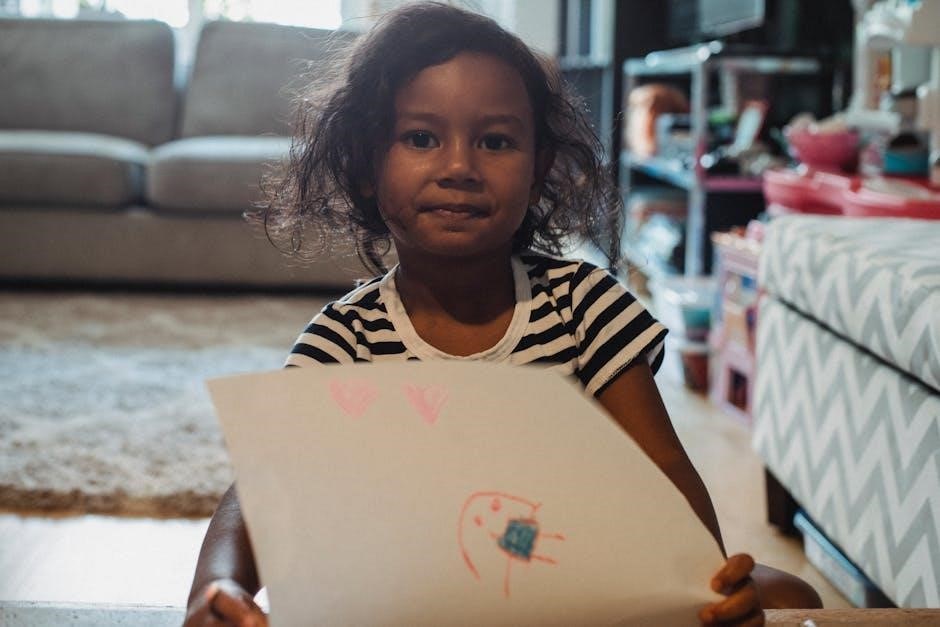
Improved Academic Performance
A key outcome of implementing “Capturing Kids Hearts” principles is demonstrably improved academic performance. When students feel valued and connected to their teachers‚ as highlighted by Mahne’s work‚ they are more engaged in learning. This engagement translates to increased motivation‚ better focus‚ and a willingness to take academic risks.
Positive relationships create a conducive learning environment where students thrive‚ ultimately leading to higher achievement and a deeper understanding of the material.
Enhanced Social-Emotional Development

Beyond academics‚ “Capturing Kids Hearts” significantly enhances students’ social-emotional development. Building strong teacher-student relationships‚ a core tenet of the approach‚ fosters a sense of belonging and security. This‚ in turn‚ cultivates empathy‚ self-awareness‚ and responsible decision-making skills.
Students learn to navigate social situations effectively and develop healthy emotional regulation‚ contributing to their overall well-being and future success.